A political decision
Since 1830 the July Monarchy had sought to appropriate imperial glory without reviving its threat: the Vendôme column was restored, the Arc de Triomphe completed in 1836, the Versailles museum dedicated "to all the glories of France". In May 1840 Thiers obtained London's permission to repatriate the body; the Chamber voted a million francs. The king saw it as a way of disarming Bonapartism; Lamartine, almost alone, warned against "the Napoleonic religion".
The expedition
The frigate La Belle-Poule, painted black and commanded by the Prince de Joinville, the king's son, sailed from Toulon in July with the veterans of Saint Helena: Bertrand, Gourgaud, Marchand, the younger Las Cases. The exhumation took place on the night of 15 October; the body, remarkably preserved, was recognised by his companions before being placed in a series of nested coffins.
15 December
In a cold of minus ten degrees, the funeral car came up the Champs-Élysées between hundreds of thousands of Parisians, passed under the Arc de Triomphe and reached the Invalides, where Louis-Philippe received the coffin: "Sire, I present to you the body of the Emperor Napoleon."
The political calculation failed: instead of extinguishing the legend, the ceremony consecrated it. Eight years later an unknown nephew was elected president of the Republic; in 1852 he restored the Empire. The final tomb, beneath the dome, was not inaugurated until 1861.
See also
Go further
Recommended books to dig deeper (affiliate links)

Napoleon the Great
Andrew Roberts · 2014
A monumental biography drawing on Napoleon’s 33,000 surviving letters, admiring but rigorous.
See on Amazon
Napoléon ou le mythe du sauveur
Jean Tulard · 1977
The book that reshaped how the man is read: how France gave itself a saviour, and what it cost.
See on Amazon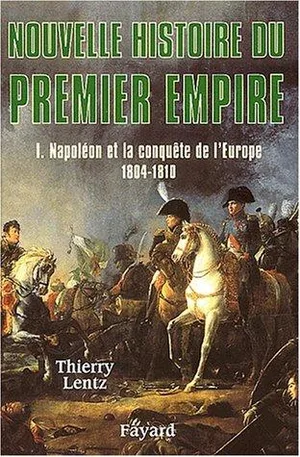
Nouvelle histoire du Premier Empire
Thierry Lentz · 2002-2010
Four reference volumes on institutions, diplomacy and collapse: the scholarly synthesis of the subject.
See on AmazonAs an Amazon Associate, this site earns from qualifying purchases.
Support the encyclopedia
Napoleon Empire is an independent project. Your contribution helps grow the content and keep the site running.
DonateSecure payment on the platform you choose.