Four years of decline
From 1817 his health deteriorated: stomach pains, vomiting, weight loss, swollen legs. The damp climate of Longwood, inaction and the permanent conflict with Governor Hudson Lowe finished a man who scarcely went out any more. On 15 April 1821 he dictated his will: "I wish my ashes to rest on the banks of the Seine, among the French people I have loved so much."
5 May
The agony lasted several days before a crowded room — Bertrand, Montholon, Abbé Vignali, the valet Marchand. He died at seventeen minutes to six, in a storm that had flattened the trees on the plateau. His reported last words, through delirium, were "France… army… head of the army".
The autopsy performed the next day by Antommarchi before seven British doctors concluded stomach cancer, the disease that had killed his father. The hypothesis of arsenic poisoning, revived in 1961 by hair analysis, remains disputed: arsenic was everywhere in the dyes, wallpapers and remedies of the time.
A grave without a name
London refused the inscription "Napoleon" that his suite demanded; the French refused "Napoleon Bonaparte", which denied the imperial title. The slab stayed blank. He was buried on 9 May in the Geranium valley beneath three willows, the grave watched by a British sentry.
The news took two months to reach Europe. It turned an inconvenient prisoner into a romantic figure: it was the death, more than the reign, that opened the legend.
See also
Go further
Recommended books to dig deeper (affiliate links)
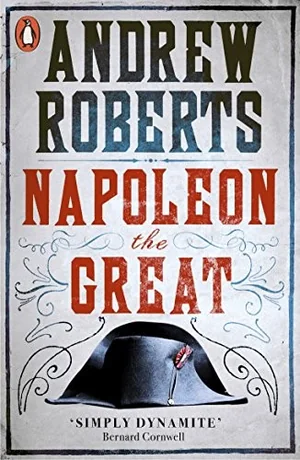
Napoleon the Great
Andrew Roberts · 2014
A monumental biography drawing on Napoleon’s 33,000 surviving letters, admiring but rigorous.
See on Amazon
Napoléon ou le mythe du sauveur
Jean Tulard · 1977
The book that reshaped how the man is read: how France gave itself a saviour, and what it cost.
See on Amazon
Nouvelle histoire du Premier Empire
Thierry Lentz · 2002-2010
Four reference volumes on institutions, diplomacy and collapse: the scholarly synthesis of the subject.
See on AmazonAs an Amazon Associate, this site earns from qualifying purchases.
Support the encyclopedia
Napoleon Empire is an independent project. Your contribution helps grow the content and keep the site running.
DonateSecure payment on the platform you choose.