
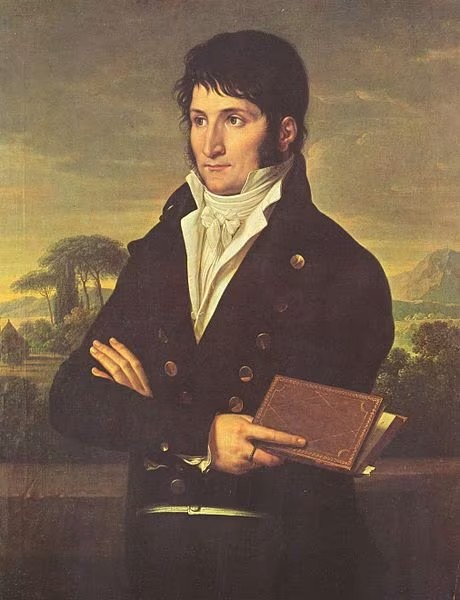
Duke of Danzig, Marshal of the Empire. First marshal to receive a ducal title for a victory (Siege of Danzig, 1807). Husband of « Madame Sans-Gêne ». Hero of 18 Brumaire.
From French Guards to Duke of Danzig
François Joseph Lefebvre was born at Rouffach, in Alsace, on 25 October 1755. Son of a town sergeant, he enlisted in the French Guards in 1773. In 1783, he married Catherine Hubscher, a laundress — the future « Madame Sans-Gêne » of Sardou's play. The Revolution hastened his career: divisional general in 1794, he fought on the Rhine, at Fleurus, at Wissembourg. In 1798, he was governor of Mainz. In 1799, the Directory appointed him commander of the 17th military division (Paris). On 18 Brumaire, at the head of twenty-five grenadiers, he burst into the hall of the Five Hundred, snatched Lucien Bonaparte from hostile deputies and ensured the coup's success. Napoleon did not forget.
A marshal in 1804 — one of the two « honorary » marshals with Kellermann — Lefebvre took part in the campaigns. In 1807, he besieged Danzig (19 March - 24 May). His phrase became famous: « I don't understand your business, but make me a hole and I'll get through. » The city capitulated. Napoleon made him Duke of Danzig on the battlefield — the first marshal to receive a ducal title for a victory. In 1812, he commanded the Old Guard at the Moskova. In 1814, he fought at Champaubert, Montmirail, Montereau.
Madame Sans-Gêne and the Hundred Days
Lefebvre and his wife Catherine — « Madame Sans-Gêne » — sometimes irritated Napoleon with their rough manners. The former laundress spoke loudly, laughed heartily, did not bow to etiquette. But the marshal remained loyal. In April 1814, he witnessed the abdication. He rallied to the Bourbons. When Napoleon landed in March 1815, Lefebvre joined him immediately. He fought at Waterloo. After the defeat, he was struck from the peerage. He died in Paris on 14 September 1820. Catherine would outlive him until 1835. The couple embodied a form of popular loyalty to the Empire — the unassuming soldier who gave everything to the Revolution and Napoleon.
Danzig and the Moskova — The Professional Soldier
The Siege of Danzig, in 1807, brought Lefebvre his hour of glory. The city, defended by Prussians and Russians, was reputed impregnable. Napoleon entrusted the blockade to the marshal. Lefebvre, who had never conducted a siege, surrounded himself with engineers and applied Vauban's lessons. When the defenders built works to delay the assault, he declared: « I don't understand your business, but make me a hole and I'll get through. » On 24 May, after two months, Danzig capitulated. Napoleon made him Duke of Danzig on the spot — the first marshal to receive a ducal title for a victory.
In 1812, Lefebvre commanded the Old Guard at the Moskova. The grenadiers and foot chasseurs were not engaged — the Emperor held them in reserve for the decisive moment. But their mere presence in the rear reassured the troops. Lefebvre, aged sixty-seven, followed the retreat. In 1814, he fought at Champaubert, Montmirail, Montereau. During the Hundred Days, he rallied to Napoleon without hesitation and charged at Waterloo with the Guard. Struck from the peerage after the defeat, he died in 1820. His path — from the French Guards to Duke of Danzig — embodied revolutionary meritocracy: the rank soldier who became a marshal through courage and loyalty.
Discover other characters



Go further
Recommended books to dig deeper (affiliate links)
Napoleon — A magisterial biography
An exhaustive biography of the Emperor, the fruit of rigorous research.
≈ £14.99Napoleon's Army
Organization, tactics and daily life of the Grande Armée soldiers.
≈ £18.00Austerlitz 1805
The detailed account of the Battle of the Three Emperors.
≈ £12.99As an Amazon Associate, this site earns from qualifying purchases.
Support the encyclopedia
Napoleon Empire is an independent project. Your contribution helps grow the content and keep the site running.
Donate