A hundred thousand exiles
Since 1791 emigration had drained France of part of its nobility, its officers and its clergy. Revolutionary law had struck them with civil death: property confiscated and sold as national land, the death penalty for returning. Successive lists, poorly kept, had ended by mixing great lords with artisans who had simply gone abroad to find work.
The Consulate had begun striking off names case by case from 1800. The senatus-consultum of 6 Floréal Year X, 26 April 1802, generalised the measure a few days before the Concordat was published: both texts came from the same policy of reconciliation.
Coming back without taking anything back
The amnesty was open to almost all, on an oath of loyalty to the Constitution and within a fixed deadline. Only about a thousand names remained proscribed, chiefly military leaders of the armed emigration and intimates of the princes.
The essential condition lay elsewhere: property sold was not returned. The purchaser of national land, enriched peasant or town bourgeois, kept his ground — that was the social bedrock of the regime, and the regime would never touch it.
The fusion of elites
Some hundred thousand people returned within a few years. Many rallied: they are found as prefects, diplomats, chamberlains, officers. The imperial nobility created in 1808 would welcome former émigrés alongside sons of the Revolution.
The calculation was twofold. It deprived the Bourbons of their following in France and gave the state trained servants. It also left in the country a body of men whose loyalty to the regime would not survive its defeats: in 1814 many found themselves naturally on the side of the Restoration.
Go further
Recommended books to dig deeper (affiliate links)

Napoleon the Great
Andrew Roberts · 2014
A monumental biography drawing on Napoleon’s 33,000 surviving letters, admiring but rigorous.
See on Amazon
Napoléon ou le mythe du sauveur
Jean Tulard · 1977
The book that reshaped how the man is read: how France gave itself a saviour, and what it cost.
See on Amazon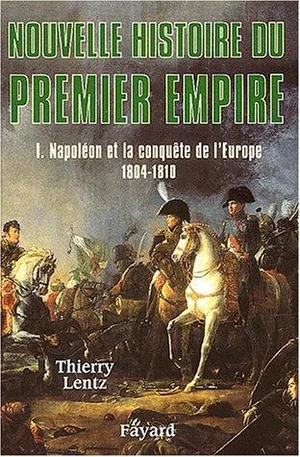
Nouvelle histoire du Premier Empire
Thierry Lentz · 2002-2010
Four reference volumes on institutions, diplomacy and collapse: the scholarly synthesis of the subject.
See on AmazonAs an Amazon Associate, this site earns from qualifying purchases.
Support the encyclopedia
Napoleon Empire is an independent project. Your contribution helps grow the content and keep the site running.
DonateSecure payment on the platform you choose.