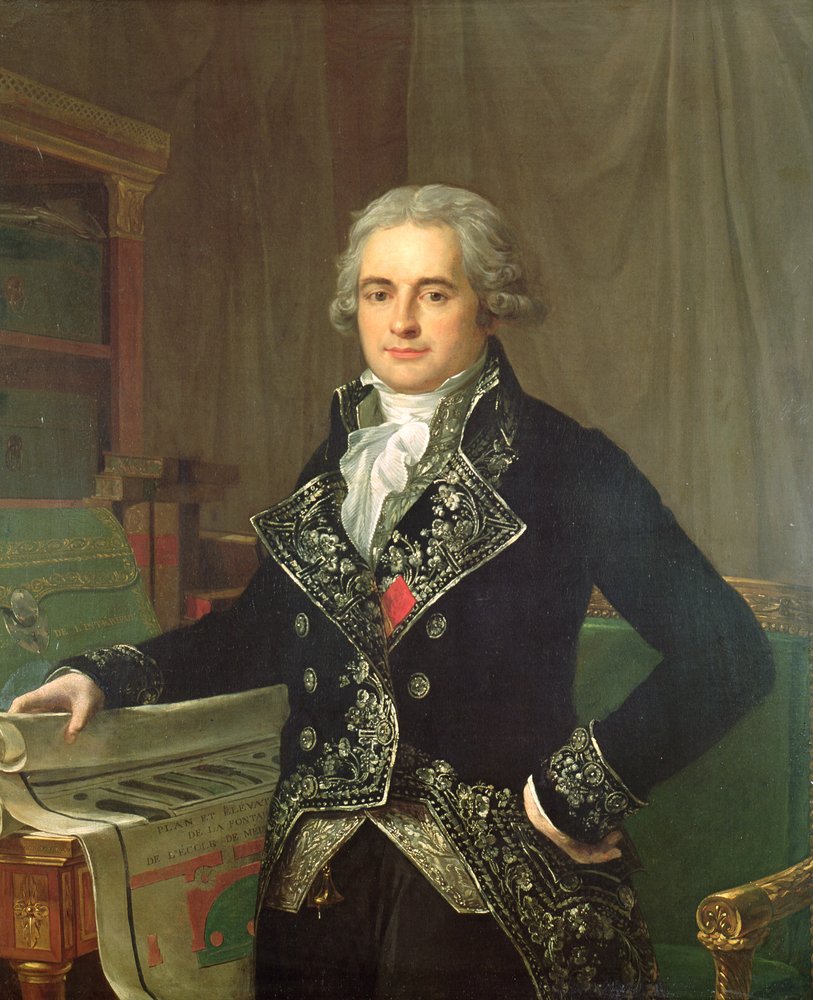
Jean-Antoine Chaptal (4 June 1756 Saint-Pierre-de-Nogaret, Lozère-30 July 1832 Paris), Count of Chanteloup, embodied union of technical Enlightenment with Revolutionary then Consular state: physician trained at Montpellier, chemist publishing on salts and acids, he did not stop at the analysis laboratory — he transposed experimental method into infrastructure policy. Elected to the Convention, he avoided the bloodiest commitments of the Terror, suffered prison under the Committee of Public Safety, recovered a career as industrialist and adviser under the Directory. Bonaparte, back from Egypt, sought men who could put numbers to France: Chaptal entered the Tribunate, then in November 1800 became Minister of the Interior to the First Consul. From 1800 to 1804 he redistributed ministry remit: bridges and roads, mines, hospices, departmental statistics, encouragement to manufactories, annual report on the country’s interior situation — tools foreshadowing the century’s industrial administration. Advocate of beet sugar to reduce dependence on colonies, common usage tied his name to controlled enrichment of musts with sugar — winegrowers’ “chaptalisation” — debate beyond legend touching normalisation of the wine market. Named senator and Count of Chanteloup on leaving office, he sat on the Council of State, presided the Interior section, drove the Society for the Encouragement of National Industry. Under Empire and Restoration he remained reference technocrat: peer of France, member of the Académie française and of sciences, testament for research. For Empire Napoléon Chaptal illustrates the productive face of the regime: less military glory than marshals, more lasting traces in circulars, accounts and roads.
Montpellier, Medicine, and Chemistry of the Enlightenment
Born 4 June 1756 at Saint-Pierre-de-Nogaret near Marvejols in Lozère, Jean-Antoine Chaptal saw his family settle in Montpellier, city of faculty and merchants, where medicine and chemistry vied with court apothecaries. He studied human body and matter: thesis, hospital practice, publications on salts, acids, agricultural applications of compounds — science he wanted useful, measurable, transmissible.
Treatises he wrote shared late eighteenth-century chemical culture: Lavoisier’s vocabulary, reproducible experiments, suspicion of occult recipes. Chaptal was neither alchemist nor mere populariser; he taught, oversaw chemical product manufactories, advised entrepreneurs seeking to bleach linen or fix dyes.
Physician-chemist double hat placed him at corporatist crossroads: pharmacy colleges, faculty, royal then revolutionary inspectors. When monarchy faltered, scientific reputation preceded political commitment: he was heard because he could explain why a salt precipitated or why a dye held on cloth.
Century’s intellectual journeys — correspondence, British and German reading — fed productivist vision: France must produce as much as it philosophises. That conviction would cross his whole career, from laboratory to ministry.
In Montpellier he moved in milieux where Revolution would be lived as chance to reform corporations without killing technique. Chaptal was no shop sans-culotte; he was a scholar who believed in institutions when they framed progress.
For Empire Napoléon this Languedoc base explains what followed: a man trained at sickbed and crucible would never confuse decree and dosage.
Convention, Terror, and Industrial Apprenticeship
Elected deputy for Lozère to the Convention, Chaptal sat among moderate Montagnards or Marsh per votes: revolutionary label ill fit a man who wanted to save his head to continue experiments. He avoided sessions where guillotine became rhetorical argument; he sometimes defended economic framing measures compatible with army supply.
Terror touched him: imprisoned under the Committee of Public Safety, he shared cells with other suspects of bourgeois culture. Release after Thermidor restored not only liberty; it confirmed a lesson: mass politics could crush scholar as fast as aristocrat.
Under the Directory Chaptal reinvested in industry: direction of chemical manufactories, advice on textiles, teaching. France needed powder, cloth, dyes; he brought processes. Networks woven with bankers and industrialists prepared future stature as “minister of figures.”
He published technical works circulating in administration: manuals for prefects, memoirs on resource exploitation. Style was dry, argued, sometimes impatient with elected ignorance.
When Bonaparte returned from Egypt and Brumaire closed Directory parenthesis, coup men sought credible figures outside military spheres alone. Chaptal entered Tribunate: tribune where laws were debated without yet governing; he defended material reconstruction policy.
For Empire Napoléon passage through Terror and factory forged minister without revolutionary naivety: he knew what slogans cost when boilers cooled.
The Ministry of the Interior under the Consulate
In November 1800 Chaptal succeeded Lucien Bonaparte at the Ministry of the Interior. The post was no Paris showcase: it concentrated bridges and roads, mines, posts, hospices, statistics, secondary education, general police of cults sometimes mixed with civil attributions — Revolutionary pile to rationalise without breaking nascent prefectures.
Chaptal imposed reporting logic: numbered circulars, questionnaires to prefects, instructions to harmonise departmental states. The minister wanted to know how many ploughs, mills, which roads impassable; data fed government discourse based on observation rather than patriotic rhetoric alone.
The First Consul, obsessed with foreign campaigns, sometimes let interior files sleep; Chaptal woke them with notes where chemistry met budget — cost of a bridge, yield of a sugar works, interest of a canal. Complementarity with Cambacérès, Portalis or other ministers did not exclude bureaucratic rivalry: each defended perimeter.
Fairs, markets, encouragement to national manufactories belonged to protectionist policy coherent with economic war against London. Chaptal did not invent blockade; he organised productive riposte: cloth manufactories, substitution of colonial materials when possible.
Annual report on situation of Republic then Empire, presented to Legislative Body, institutionalised administrative transparency — at least on paper. Historians read ambition of statistician state beyond simple Napoleonic absolutism.
Ingres portrait showing Bonaparte in First Consul dress evokes window when Chaptal served: chief’s personal prestige, yet already dense administrative machine the chemist meant to oil with procedure.
Statistics, Roads, and Prefectural Fabric
Chaptal ministry consolidated link between prefect and centre: prefect was no longer merely temporary Revolutionary agent; he became obligatory relay of economic data. Printed models, quarterly requests, comparative tables built administrative memory wars did not fully erase.
Bridges and roads gained renewed attention: maintenance of royal roads become national, bridge projects, travel metrics. Chaptal knew an army marched on its train; he also knew grain rotting on road cost more than local rhetorical defeat.
Mines and quarries entered framed exploitation logic: safety, yield, taxation. Minister’s chemistry informed reading of fuels and ores; he read engineers’ reports with eye that had weighed carbonates.
Hospices and rudimentary social questions — poor, foundlings — stayed within interior remit. Restoration would pursue other bases; under Consulate Chaptal traced circulars mixing public morality and bookkeeping.
Secondary education, still heterogeneous, received instructions to harmonise programmes and premises. Goal was to train cadres able to read technical report without drowning in scholastic Latin.
For Empire Napoléon this chapter shows Chaptal as architect of “measurable France”: prelude to great nineteenth-century statistics, without yet modern graphic tools.
Beet, Chaptalisation, and the Society for Encouragement
Chaptal defended beet sugar as strategic alternative to colonial cane: economic and geopolitical argument when sea routes closed to French trade. Agronomic trials, premiums to growers, experimental factories belonged to industrial policy minister extended after 1804 through Senate and Council of State influence.
In oenology his name attached to practice of adding sugar to fermentation to stabilise wine alcoholic degree — “chaptalisation.” Contemporary and later debates opposed terroir purists and normalisers; economic historians saw step toward market standardisation. Chaptal was not sole promoter, but ministerial notoriety fixed the label.
Society for Encouragement of National Industry, which he chaired or drove closely, created space where engineers, industrialists and bankers negotiated projects and credits. Not yet great investment bank; useful club to spread prototypes and patents.
Under Empire Chaptal sat on Council of State, presided Interior section: he continued influencing circulars and opinions without ministerial title. Scientific prestige legitimated technical arbitrations before sometimes sceptical marshals.
Late publications — manuals, memoirs — codified expert career. Style remained didactic: he wanted to train practitioners, not only impress Académie.
For Empire Napoléon this segment tied chemist to taste and sugar: policy of bodies — wine, sugar, cloth — as decisive as some battles for social balance.
Restoration, Academies, and Legacy
Transitions of 1814 and 1815 largely spared Chaptal: Restoration needed men who could read a balance sheet. Peer of France, he sat in Chamber of Peers without becoming flamboyant orator; he intervened on roads, mines, agricultural questions. Ultras sometimes mistrusted former Napoleonic servant; moderates consulted him.
Member of Académie française and Académie des sciences, he embodied continuity of scholarly institutions across regimes. Academic eulogies and reports extended ministry through other channels: cultural legitimacy of technician.
He died in Paris on 30 July 1832, leaving testament favourable to research and teaching. Funerals reflected double career: statesman and scholar. Nineteenth-century school manuals kept his name for applied chemistry; winegrowers for sugar debate.
Historiographic legacy ranks him among “great servants” of material Consulate — less mediatised than marshals, more present in prefectural archives. Administration historians see precursor of technical welfare state.
For Empire Napoléon cross-linked entries Chaptal ties Napoleon, Cambacérès, Portalis, Maret, Fouché and Sieyès: network of texts, circulars and laws where regime raw material was not powder alone.
In conclusion Jean-Antoine Chaptal illustrates specificity of empire built on figure and road too: chemist become minister, then senator, he left in French bureaucracy habits of measurement surviving uniforms.
Discover other characters
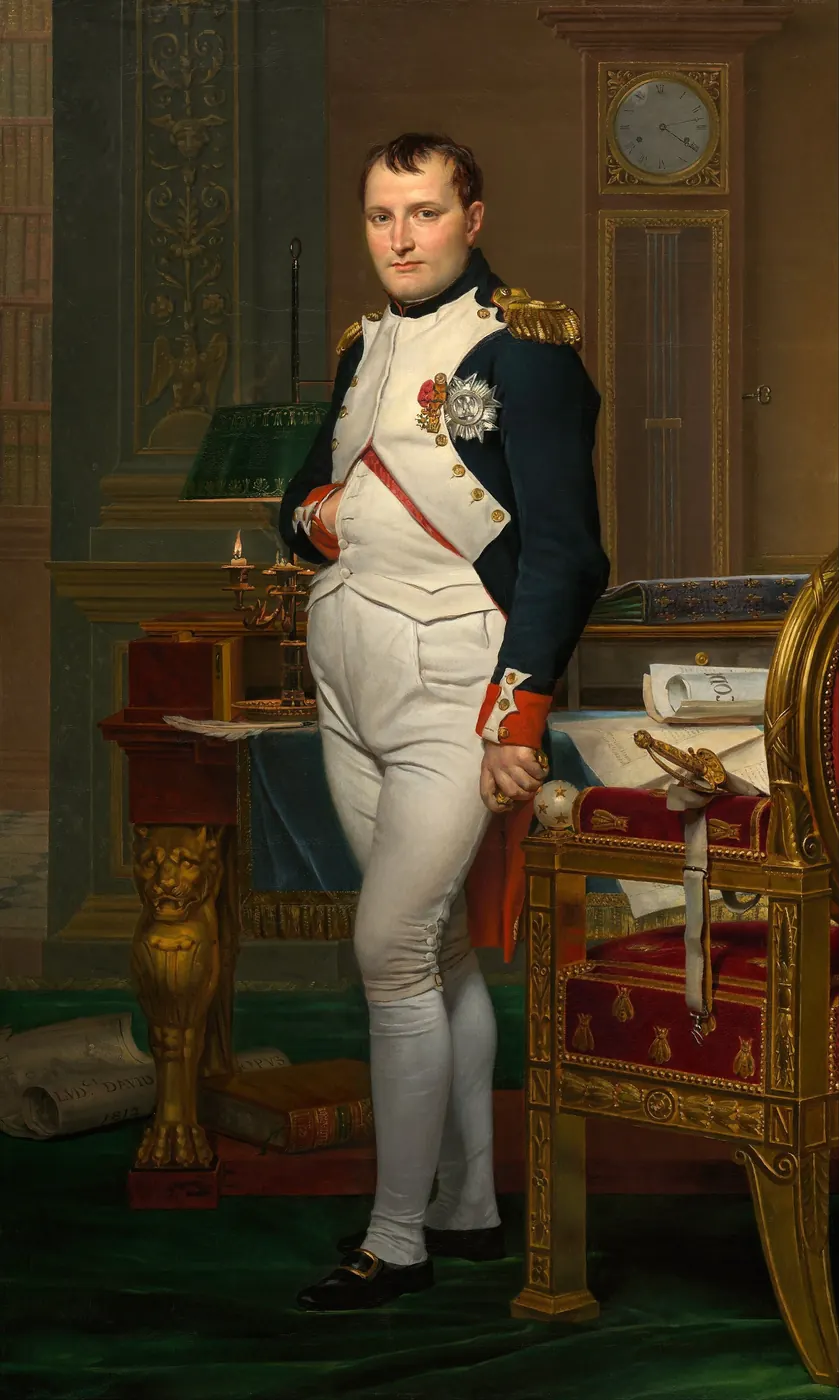
Napoleon Bonaparte
Emperor of the French
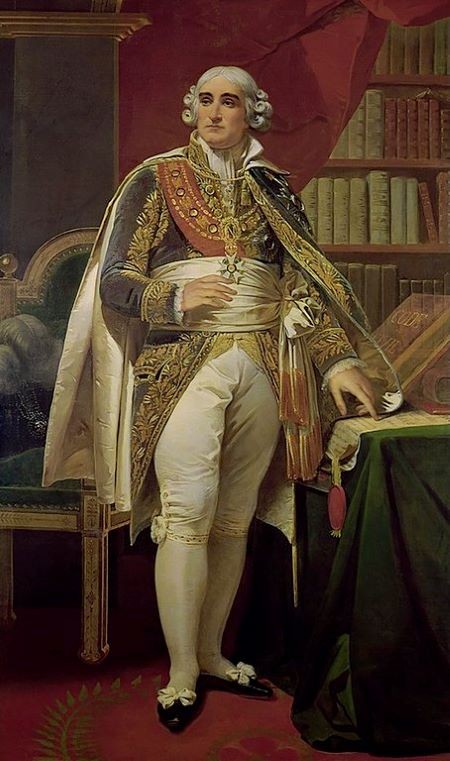
Jean-Jacques Régis de Cambacérès
Second Consul, Archchancellor of the Empire, principal architect of the Civil Code (1804)
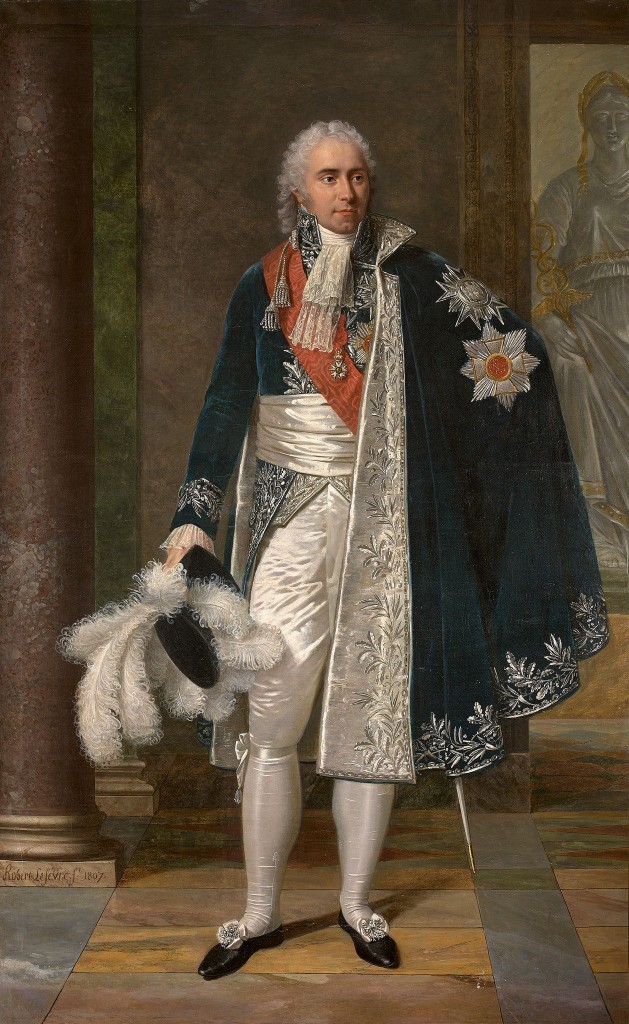
Hugues-Bernard Maret
Duke of Bassano, Secretary-General of the Government then Minister for Foreign Affairs and Secretary of State (1811–1813)
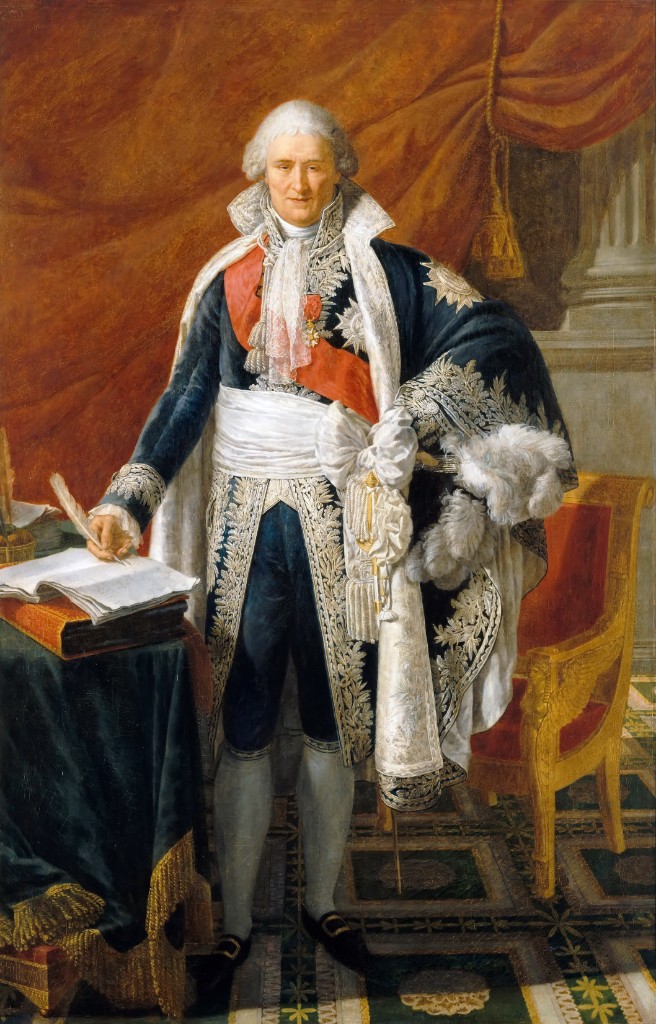
Jean-Étienne-Marie Portalis
Lawyer, co-drafter of the Civil Code, Minister of Religious Affairs
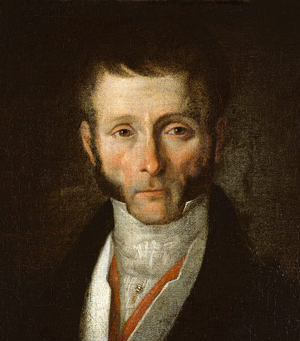
Joseph Fouché
Minister of Police, Duke of Otranto, president of the provisional government (1815)
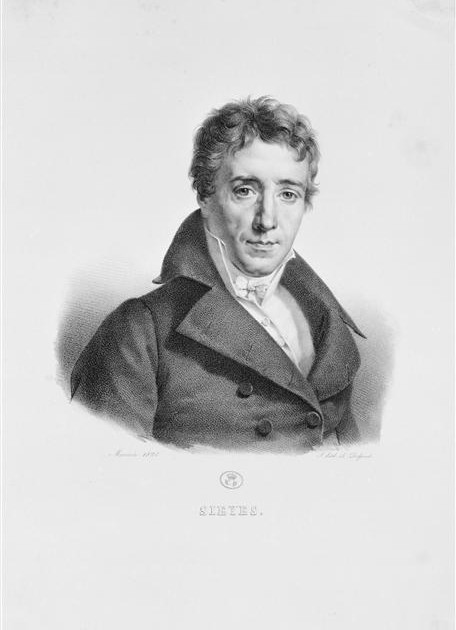
Emmanuel Joseph Sieyès
Political theorist, deputy, Director, Consul
Go further
Recommended books to dig deeper (affiliate links)
Napoleon the Great
Andrew Roberts · 2014
A monumental biography drawing on Napoleon’s 33,000 surviving letters, admiring but rigorous.
See on Amazon
Napoléon ou le mythe du sauveur
Jean Tulard · 1977
The book that reshaped how the man is read: how France gave itself a saviour, and what it cost.
See on Amazon
Nouvelle histoire du Premier Empire
Thierry Lentz · 2002-2010
Four reference volumes on institutions, diplomacy and collapse: the scholarly synthesis of the subject.
See on AmazonAs an Amazon Associate, this site earns from qualifying purchases.
Support the encyclopedia
Napoleon Empire is an independent project. Your contribution helps grow the content and keep the site running.
DonateSecure payment on the platform you choose.