The only battlefield of the Italian campaign that can still be read on the ground. The plateau above the Adige has changed little — and a Paris street bears the village's name.
Historical context
Rivoli is a balcony. The village sits on a narrow plateau between the Adige, sunk in its gorge to the west, and the foothills of Monte Baldo to the east; the Austrian columns coming from the north had to debouch by narrow mountain tracks, unable to support one another. On 14 January 1797 that relief counted as much as the orders.
It is today one of the few Napoleonic sites that can still be read standing. Vines and olives have replaced the crops of the day, but the slopes, the defiles and the view over the valley are those of 1797. A commemorative obelisk crowns the plateau, and one grasps in a few minutes, without documentation, why an army arriving from the north lost its advantages there.
The victory earned the village an unexpected posterity. When Percier and Fontaine drove a great straight avenue along the Tuileries in 1802, it was named rue de Rivoli: today one of the best-known streets in Paris, and almost nobody connects it with this plateau in the Veneto.
The name also served as a title. Masséna, whose division was decisive that day, was made Duke of Rivoli in 1808 — one of the victory titles by which the Empire turned the geography of its campaigns into a nobility of state.
Go further
Recommended books to dig deeper (affiliate links)
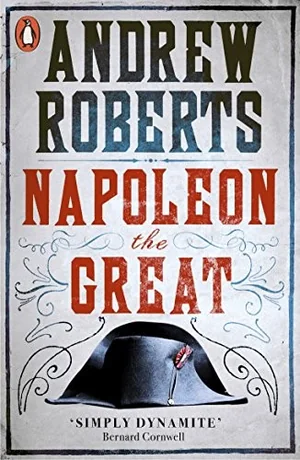
Napoleon the Great
Andrew Roberts · 2014
A monumental biography drawing on Napoleon’s 33,000 surviving letters, admiring but rigorous.
See on Amazon
Napoléon ou le mythe du sauveur
Jean Tulard · 1977
The book that reshaped how the man is read: how France gave itself a saviour, and what it cost.
See on Amazon
Nouvelle histoire du Premier Empire
Thierry Lentz · 2002-2010
Four reference volumes on institutions, diplomacy and collapse: the scholarly synthesis of the subject.
See on AmazonAs an Amazon Associate, this site earns from qualifying purchases.
Support the encyclopedia
Napoleon Empire is an independent project. Your contribution helps grow the content and keep the site running.
DonateSecure payment on the platform you choose.