The battle known as the Pyramids was in fact fought at Embabeh, fifteen kilometres away. The line about forty centuries was probably written afterwards — and it worked.
Historical context
On 21 July 1798, after three weeks marching through the desert, the army finally found its enemy: Murad Bey's Mamluks, backed against the Nile near the village of Embabeh, opposite Cairo. The pyramids were visible on the horizon, some fifteen kilometres to the south-west; it was from them that the bulletin took its name.
Bonaparte formed five divisional squares, artillery at the angles, cavalry and baggage in the centre. The Mamluk charge, magnificent and suicidal, broke on the crossfire. The fight lasted a few hours: a few hundred French dead, several thousand Egyptians, many of them drowned in the Nile. The most prestigious cavalry in the East had just been destroyed by an infantry formation.
The sentence — remember that from the top of these monuments forty centuries look down upon you — appears in no document of the day itself. It is attested later, in reconstructed accounts, and was probably fixed afterwards, at Saint Helena or by the memoirists. It has become more famous than the battle.
The Giza plateau was immediately taken over by the expedition's scholars. Monge and Berthollet measured the Great Pyramid and calculated the volume of stone; the draughtsmen recorded the half-buried Sphinx. These surveys fed the Description de l'Égypte, and the Rosetta Stone brought back from the same campaign allowed Champollion to decipher hieroglyphs in 1822. Egyptology was born of a lost military expedition.
Go further
Recommended books to dig deeper (affiliate links)
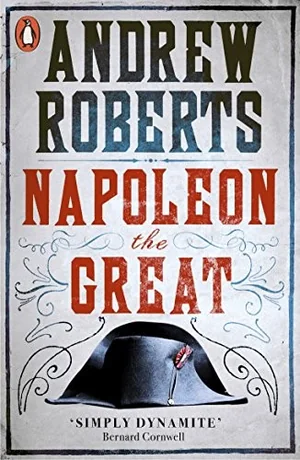
Napoleon the Great
Andrew Roberts · 2014
A monumental biography drawing on Napoleon’s 33,000 surviving letters, admiring but rigorous.
See on Amazon
Napoléon ou le mythe du sauveur
Jean Tulard · 1977
The book that reshaped how the man is read: how France gave itself a saviour, and what it cost.
See on Amazon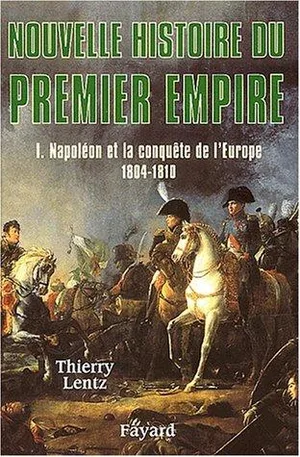
Nouvelle histoire du Premier Empire
Thierry Lentz · 2002-2010
Four reference volumes on institutions, diplomacy and collapse: the scholarly synthesis of the subject.
See on AmazonAs an Amazon Associate, this site earns from qualifying purchases.
Support the encyclopedia
Napoleon Empire is an independent project. Your contribution helps grow the content and keep the site running.
DonateSecure payment on the platform you choose.