One year of study instead of two or three: his father's death forced cadet Bonaparte to sit the artillery examination in haste. He came out an officer at sixteen, forty-second of fifty-eight.
Historical context
Founded by Louis XV and built by Ange-Jacques Gabriel facing the Champ-de-Mars, the École Militaire trained cadets for the king's service. Bonaparte entered in October 1784, coming from Brienne. There he rubbed shoulders with an aristocracy far richer than himself and is said to have written a memorandum criticising the school's luxury as ill-suited to forming soldiers.
He chose the artillery. That was no accident: it was the learned arm, entered by examination, where promotion depended less on birth than in the cavalry or infantry. Mathematics, ballistics and fortification counted for more there than quarters of nobility — for a poor Corsican cadet it was the only road really open.
Charles Bonaparte died at Montpellier in February 1785, leaving his family without resources. Napoleon then decided to sit the examination after a single year of study instead of the usual two or three. He passed on 28 September 1785, forty-second of fifty-eight — a mediocre ranking, obtained in half the time the others took. He was commissioned second lieutenant at sixteen.
The Champ-de-Mars, in front of the school, would become the great stage of the Revolution and then of the Empire: the Festival of the Federation in 1790, and on 5 December 1804, three days after the coronation, the solemn distribution of the eagles to the regiments. The building has remained military; it houses the War College today.
Go further
Recommended books to dig deeper (affiliate links)
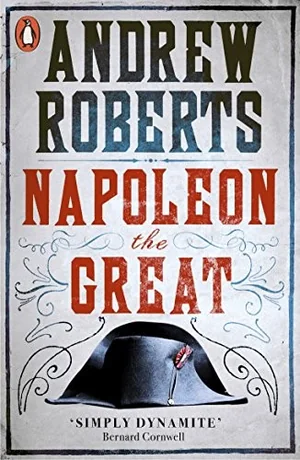
Napoleon the Great
Andrew Roberts · 2014
A monumental biography drawing on Napoleon’s 33,000 surviving letters, admiring but rigorous.
See on Amazon
Napoléon ou le mythe du sauveur
Jean Tulard · 1977
The book that reshaped how the man is read: how France gave itself a saviour, and what it cost.
See on Amazon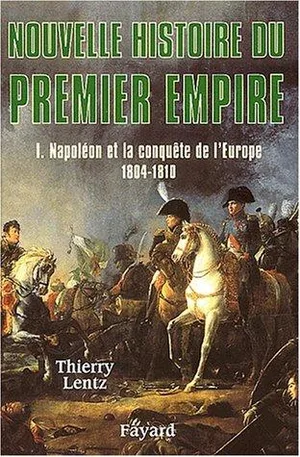
Nouvelle histoire du Premier Empire
Thierry Lentz · 2002-2010
Four reference volumes on institutions, diplomacy and collapse: the scholarly synthesis of the subject.
See on AmazonAs an Amazon Associate, this site earns from qualifying purchases.
Support the encyclopedia
Napoleon Empire is an independent project. Your contribution helps grow the content and keep the site running.
DonateSecure payment on the platform you choose.