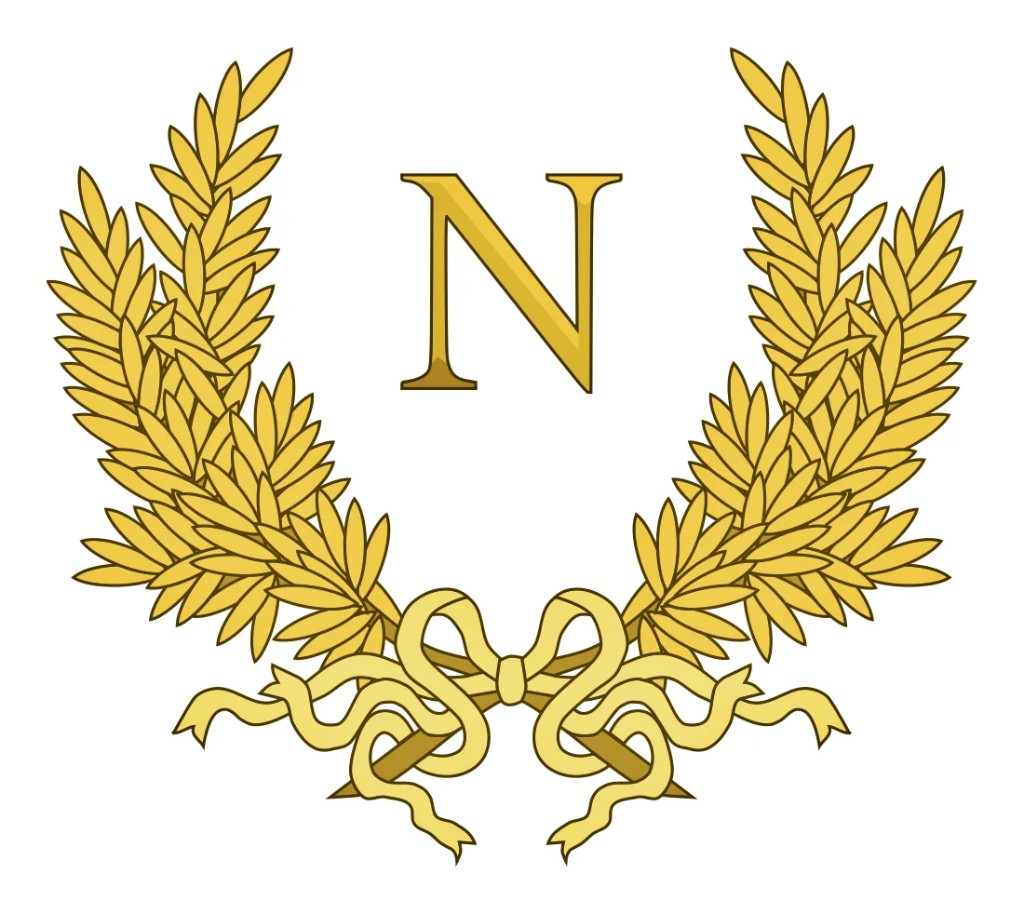
Crowned cipher, monogram or emblem: Napoleon's « N » permeates palaces, furniture and art objects of the First Empire.
Origins and precedents
The cipher "N" appeared from the Consulate on seals, coinage and public buildings. After 1804 it was systematically crowned — sometimes wreathed in laurel or flanked by the eagle — to signify the Emperor's person as much as the imperial institution.
Percier and Fontaine, reference decorative architects, deployed the monogram at the Tuileries, Fontainebleau, Compiègne: precious wood marquetry, gilt bronze, overdoors, panelling. Each piece of imperial furniture became a vehicle of dynastic propaganda: the N announced who owned the place and set its taste.
Birth of the imperial symbol
Empire style, so named from the nineteenth century, is inseparable from this cipher. Commodes, armchairs and consoles bore the monogram on handles, backs, feet. Foreign visitors entering Paris salons understood at once they entered the sovereign's personal universe.
The Sèvres factory reproduced the cipher on plates, vases and services given to foreign sovereigns and marshals. A porcelain gift with eagle and N was diplomatic message: alliance, favour, entry into the imperial circle. Davout, Masséna and Berthier received dozens.
Official uses
Paris goldsmiths — Odiot, Biennais — engraved the monogram on honour swords, snuffboxes and ceremonial cups. Empire goldsmithing was court art as much as trade: every object bore power's mark.
In the military field N appeared on buttons, shako plates, Guard harness. It reminded the soldier of personal loyalty to the Emperor — beyond tricolour flag and regimental eagle. This fusion of national and personal is typical of Bonapartism.
In the army and in battle
The crowned N also adorned cannon castings, engraved ammunition and Grande Armée cartridge boxes. The arsenal became propaganda support: even war matériel bore the sovereign's name.
In architecture the cipher appeared on façades of public monuments — bridges, fountains, columns — financed by the imperial state. The Vendôme Column, inaugurated in 1810, bears an eagle at its summit but construction and celebrations constantly linked the imperial monogram to Austerlitz victory.
Propaganda and representation
Medals and presentation tokens spread the N in courtiers', agents' and soldiers' pockets. The Emperor's portrait stood beside the cipher: double presence, face and initial, anchoring personality beyond still-nonexistent photography.
After the 1814 abdication craftsmen sometimes erased N from woodwork; the Restoration replaced it with fleurs-de-lis or Bourbon ciphers. The Hundred Days briefly brought it back on flags and proclamations.
Posterity and collections
The Second Empire would massively reuse the monogram, sometimes confused with the First. Napoleon III leaned on the original N's iconic force to legitimise his dynasty, though purists distinguish the two decorative styles.
Today the crowned N remains widespread in Napoleonic souvenir trade: buckles, frames, wallpaper. It instantly evokes 1804-1815, sometimes regardless of historical nuance.
Memory and debate
The imperial N is power's visual signature: wherever it appears it says history is that of a man become institution — and that taste, war and diplomacy bear the same name. No other French monogram reached this ubiquity.
For Empire Napoléon the crowned cipher remains the First Empire's most intimate mark: more personal than the eagle, more discreet than the tricolour, it says in one letter who commanded France between coronation and exile.
Go further
Recommended books to dig deeper (affiliate links)

Napoleon — A magisterial biography
An exhaustive biography of the Emperor, the fruit of rigorous research.
≈ £14.99 Napoleon's Army
Organization, tactics and daily life of the Grande Armée soldiers.
≈ £18.00 Austerlitz 1805
The detailed account of the Battle of the Three Emperors.
≈ £12.99As an Amazon Associate, this site earns from qualifying purchases.
Support the encyclopedia
Napoleon Empire is an independent project. Your contribution helps grow the content and keep the site running.
Donate