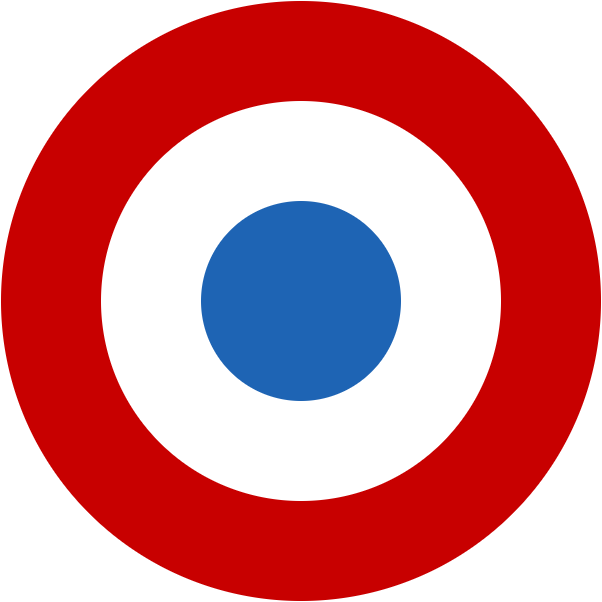
Blue, white, red: from Revolution to Grande Armée shakos, the cockade identifying the French soldier.
Origins and precedents
The tricolour cockade was born in 1789 from symbolic fusion of Paris blue and red with royal white. It quickly became patriots' then Republican soldiers' insignia. Napoleon inherited and kept this emblem: rejecting the cockade would have meant denying the revolutionary legitimacy on which he built power as general, consul and finally emperor.
The decree of 27 pluviôse Year II (15 February 1794) imposed the tricolour as national emblem of the armies; consular then imperial regulations specified its making — silk or wool ribbon, concentric circles or spiral, diameter by branch. Napoleonic military administration was obsessed with uniformity: a poorly made cockade on a line shako was an equipment fault like a rusty bayonet.
Birth of the imperial symbol
On hats, shakos and bicornes the cockade was the immediate marker of nationality. In battle it distinguished friend from foe in smoke, dust and cavalry-charge chaos. Staff officers spotted blue-white-red masses from afar to judge battalion deployment.
The enlarged white centre under some imperial regulations increased visibility at distance and recalled constitutional monarchy absorbed by the Republic. Officers sometimes wore embroidered or gilt cockades; the Imperial Guard even more sumptuous versions, sometimes with an N at centre. The cockade accompanied the soldier in authorised off-duty uniform: visible link between citizen and fighter.
Official uses
Allied or integrated regiments — Poles of the Vistula Legion, Italians, Croats, Batavians — often wore the French cockade beside their own distinctions. The Empire thus exported a sign of loyalty: wearing the tricolour meant marching under French authority, whatever the regiment's language.
The navy bore cockades on officers' hats and sometimes on ensigns; ship crews wore them at embarkation ceremonies. At sea as on land the tricolour said: this man serves Napoleon's France.
In the army and in battle
Coalition forces imitated or opposed the tricolour gesture: each Sixth Coalition army bore national colours, but the French cockade was so recognisable it became target and trophy. Capturing a tricolour cockade shako meant striking the republican-turned-imperial foe's very identity; enemy newspapers published engravings of such captures to boost morale.
Inside France the cockade also structured civil society: officials, National Guard, imperial lycée pupils wore it at official festivals. It was not camp-bound: it united the armed nation and administered nation under one sign.
Propaganda and representation
Imperial propaganda artists — Isabey, Lejeune, Vernet — systematically placed the cockade on secondary figures in their compositions, anchoring the French soldier in a colour code immediately readable for the European public.
After the first 1814 abdication Louis XVIII tried to reimpose the Bourbon white cockade; old Empire soldiers and liberals wore it secretly or replaced it with a discreet tricolour. The episode shows emotional attachment to an emblem linked to victory and national glory.
Posterity and collections
The Hundred Days of 1815 saw official return of the tricolour on shakos; Waterloo fixed for a generation the image of the blue-white-red cockade soldier facing British red and Prussian white. Defeat did not erase the symbol: it loaded it with melancholy memory.
In July 1830 the Paris revolution definitively wrested the tricolour from monarchy: the white cockade was torn from hats before trophies of the Vendôme Column. The blue-white-red return anchored the cockade in French national identity to the present, on armed forces uniform and elected officials' dress.
Memory and debate
Uniform historians catalogue dozens of regulatory and non-regulatory variants: size, winding direction, material. Each detail becomes evidence for dating a late photograph, figurine or museum mannequin.
For Empire Napoléon the tricolour cockade is the discreet yet omnipresent soldier's symbol: less monumental than the eagle, more everyday, it simply says: this man is French, and he marches for the Empire.
Go further
Recommended books to dig deeper (affiliate links)

Napoleon — A magisterial biography
An exhaustive biography of the Emperor, the fruit of rigorous research.
≈ £14.99 Napoleon's Army
Organization, tactics and daily life of the Grande Armée soldiers.
≈ £18.00 Austerlitz 1805
The detailed account of the Battle of the Three Emperors.
≈ £12.99As an Amazon Associate, this site earns from qualifying purchases.
Support the encyclopedia
Napoleon Empire is an independent project. Your contribution helps grow the content and keep the site running.
Donate